Archives
- 2026-11
- 2026-10
- 2026-09
- 2026-08
- 2026-07
- 2026-06
- 2026-05
- 2026-04
- 2026-03
- 2026-02
- 2026-01
- 2025-12
- 2025-11
- 2025-10
- 2025-09
- 2025-04
- 2025-03
- 2025-02
- 2025-01
- 2024-12
- 2024-11
- 2024-10
- 2024-09
- 2024-08
- 2024-07
- 2024-06
- 2024-05
- 2024-04
- 2024-03
- 2024-02
- 2024-01
- 2023-12
- 2023-11
- 2023-10
- 2023-09
- 2023-08
- 2023-07
- 2023-06
- 2023-05
- 2023-04
- 2023-03
- 2023-02
- 2023-01
- 2022-12
- 2022-11
- 2022-10
- 2022-09
- 2022-08
- 2022-07
- 2022-06
- 2022-05
- 2022-04
- 2022-03
- 2022-02
- 2022-01
br COX and LOX in post
2022-11-04
COX and 5-LOX in post-mortem AD brain Minghetti (2004) reviewed the findings on COX-2 mRNA levels in AD brains, pointing out that the available evidence demonstrated either decreased or increased levels, possibly because of the short half-life of COX-2 transcripts or individual variability. Histo
From our in vivo studies
2022-11-04
From our in vivo studies and previously reported findings [25], we have found that orteronel possesses excellent oral BA. Indeed, single oral dosing of orteronel at doses of 0.3–10.0mg/kg decreased serum DHEA levels in a dose-dependent manner. Of interest, DHEA levels did not return to levels compar
br Autophagy in hemorrhagic stroke About of all
2022-11-04
Autophagy in hemorrhagic stroke About 87% of all strokes cases are ischemic, the rest being hemorrhagic. ICH and SAH are the two major categories of hemorrhagic strokes (Bruder et al., 2014). Both types of stroke are associated with a high mortality and morbidity rate. The corresponding animal mo
The link between HPV infection and neoplasia
2022-11-04
The link between HPV infection and neoplasia has been well established. HPV encodes two oncogenes (E6 and E7) that drive tyramide progression by controlling the functions of tumor suppressor proteins p53 and Rb [7]. HPV is associated with more than 99% of cervical CESC cases [8]. CESC remains a maj
The R pycnus arginase was identical to
2022-11-04
The R. pycnus arginase was 65% identical to the published B. caldovelox arginase sequence (AAB06939). Furthermore, the R. pycnus arginase gene was 62%, 45%, 36% and 22% identical to the published arginase sequences from Bacillus thuringiensis (AJI37018), Thermus thermophiles (WP_038039155), Human ar
Gene regulation of MMPs is influenced by the transcription f
2022-11-03
Gene regulation of MMPs is influenced by the transcription factor activating factor-1 (AP-1). AP-1 complexes are heterodimers of proteins of the two proto-oncogene families (jun and fos) and have Solithromycin in the promoter region of MMPs, as well as in genes mediating inflammatory responses. The
In order to further explore whether the
2022-11-03
In order to further explore whether the cytoprotective effect of isogarcinol against oxidative stress in H2O2-induced HepG2 87 7 is a consequence of the breakdown of the endogenous antioxidant defence mechanism, we measured the LDH release, MDA levels, GSH levels and SOD activity. A large body of e
br Diabetic retinopathy Diabetic retinopathy is a severe sig
2022-11-03
Diabetic retinopathy Diabetic retinopathy is a severe sight-threatening complication associated with diabetes mellitus. It is one of the most common causes of preventable blindness in the world. The risk of developing microvascular diabetic complications increases in diabetic patients with an inc
Although many factors influence the effects of
2022-11-03
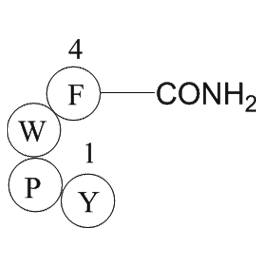
Although many factors influence the effects of medications, during recent years it has become evident that genetic factors could explain the differences between individuals in drug response. These differences are due to variants in genes encoding drug targets [8]. The challenge for pharmacogenetics
Recent studies revealed that certain plant derived compounds
2022-11-03
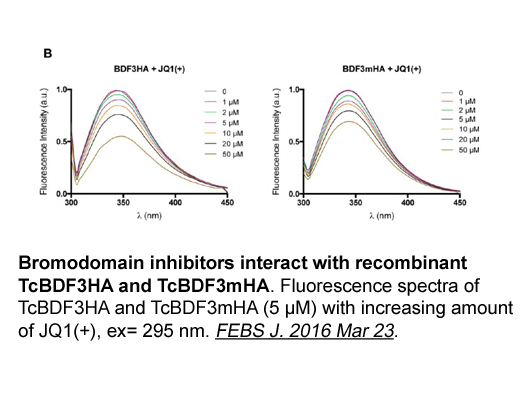
Recent studies revealed that certain plant-derived compounds can also interfere with AR function. One way of such an interference is by modulating its expression levels. This is the case for the two flavonoids quercetin and luteolin that have been reported to repress the function of AR by inhibiting
br Introduction Quenchbody Q body immunoassay is
2022-11-03
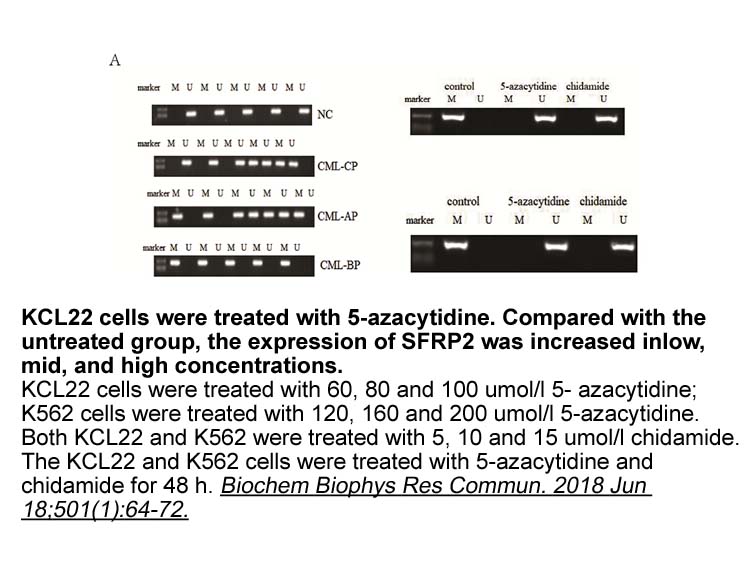
Introduction Quenchbody (Q-body) immunoassay is a novel biosensing technology that uses the quenching of fluorescence by intrinsic tryptophan (Trp) residues in antibody variable regions when dye(s) are conjugated to an antibody or antibody fragments in appropriate position, and de-quenching while
Kuda et al reported that the activity of aminopeptidase A
2022-11-03
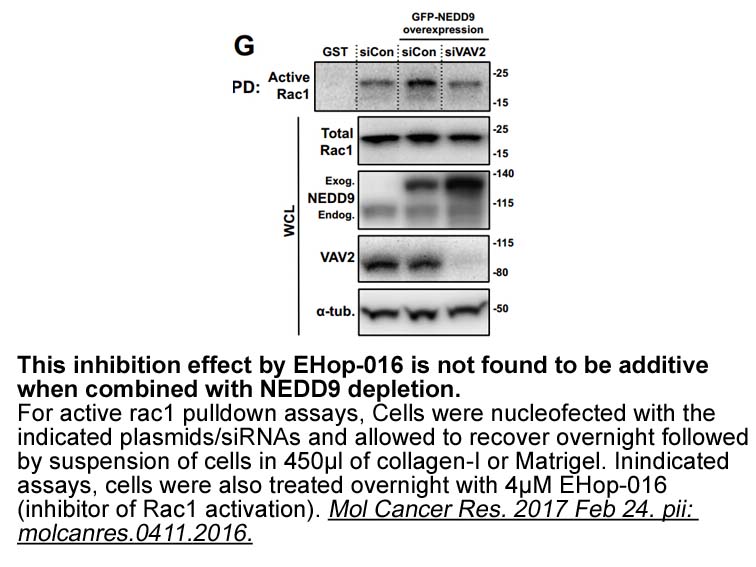
Kuda et al. (1997) reported that the activity of aminopeptidase A (ApA) but not aminopeptidase B (ApB) nor aminopeptidase N (ApN) was decreased in plasma from patients with Alzheimer's disease (AD). More recently Puertas et al. (2013) reported that the activities of plasma ApA, ApB, ApN and IRAP wer
In AD and possibly other forms of dementia it
2022-11-03
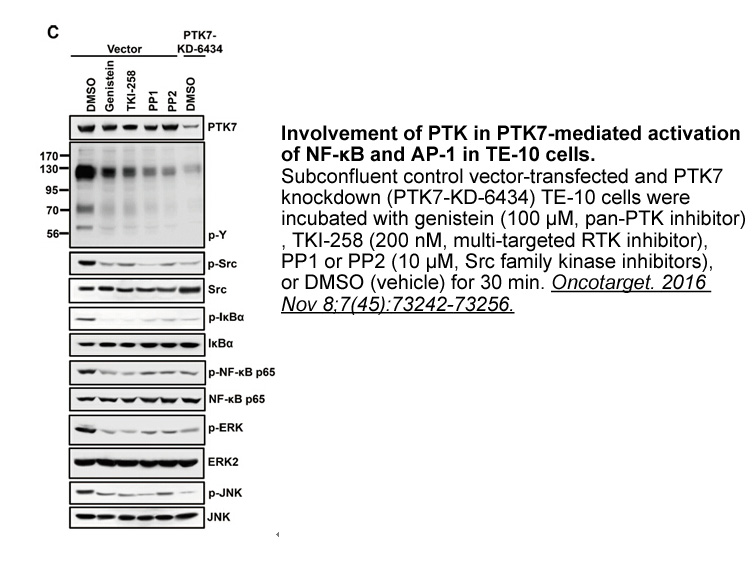
In AD, and possibly other forms of dementia, it has been suggested that tau mislocalization to dendritic spines anticipates neurodegeneration [48]. Accumulation of hyperphosphorylated tau in dendritic spies would cause a derangement of synaptic function, thereby impairing excitatory synaptic transmi
HT receptors are distributed throughout the brain within the
2022-11-03
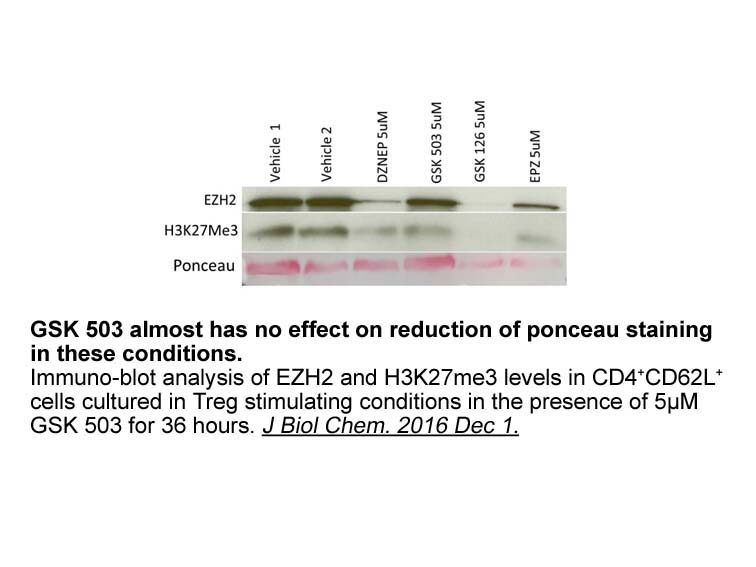
5-HT3 receptors are distributed throughout the brain, within the brainstem (e.g., nucleus tractus solitarius, area postrema and spinal trigeminal nucleus) and EGTA sale (e.g., hippocampus, amygdala, nucleus accumbens, putamen and caudate) (Abi-Dargham et al., 1993, Barnes et al., 1989, Bufton et al
Silk which is a mixture of mainly SF
2022-11-03
Silk, which is a mixture of mainly SF and sericin, has an extensive history in clinical application as a suture material. Unwanted immune reactions to silk sutures observed early on in their application were assigned to the presence of sericin. However, in vitro and in vivo evaluations of pure SF fi
8654 records 424/577 page Previous Next First page 上5页 421422423424425 下5页 Last page