Archives
- 2026-10
- 2026-09
- 2026-08
- 2026-07
- 2026-06
- 2026-05
- 2026-04
- 2026-03
- 2026-02
- 2026-01
- 2025-12
- 2025-11
- 2025-10
- 2025-09
- 2025-04
- 2025-03
- 2025-02
- 2025-01
- 2024-12
- 2024-11
- 2024-10
- 2024-09
- 2024-08
- 2024-07
- 2024-06
- 2024-05
- 2024-04
- 2024-03
- 2024-02
- 2024-01
- 2023-12
- 2023-11
- 2023-10
- 2023-09
- 2023-08
- 2023-07
- 2023-06
- 2023-05
- 2023-04
- 2023-03
- 2023-02
- 2023-01
- 2022-12
- 2022-11
- 2022-10
- 2022-09
- 2022-08
- 2022-07
- 2022-06
- 2022-05
- 2022-04
- 2022-03
- 2022-02
- 2022-01
-
Several studies have indicated MUC to
2022-06-09

Several studies have indicated MUC1 to be an effective marker for identifying various malignant tumors, such as gastric, breast, pancreatic, ovarian, gallbladder, uterus, lung, and prostate cancers, as well as for prognostic outcomes [16], [17], [18], [19], [20], [21], [22], [23]. Studies by Kaira e
-
A localization of GK to both a cytoplasmic and perinuclear
2022-06-09

A localization of GK to both a cytoplasmic and perinuclear area of normal rat pancreatic beta-cells was reported in 1996 (Noma et al., 1996), which changed on acute hyperglycemia to a more diffuse staining throughout the cytoplasm. The localization of GK within the nucleus was first reported by Mura
-
In the absence of HH ligand HH signaling
2022-06-09
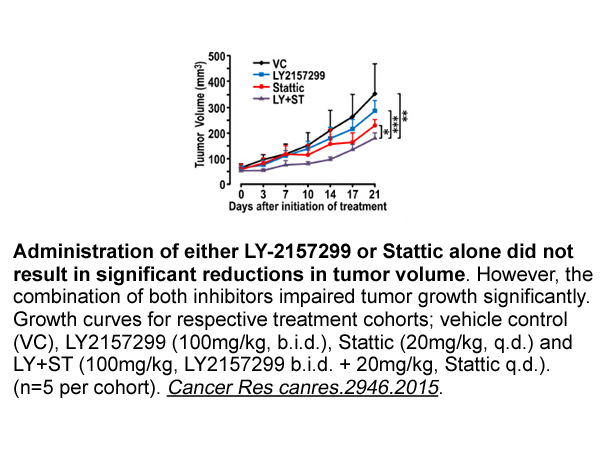
In the absence of HH ligand, HH signaling is actively maintained in a repressed state by the activity of the HH receptor Patched (PTCH). PTCH is a 12-transmembrane domain protein whose intracellular localization is concentrated at the Sulindac of the primary cilium, a single antenna-like structure t
-
Ulimorelin also known as TPZ is a macrocyclic molecule that
2022-06-09
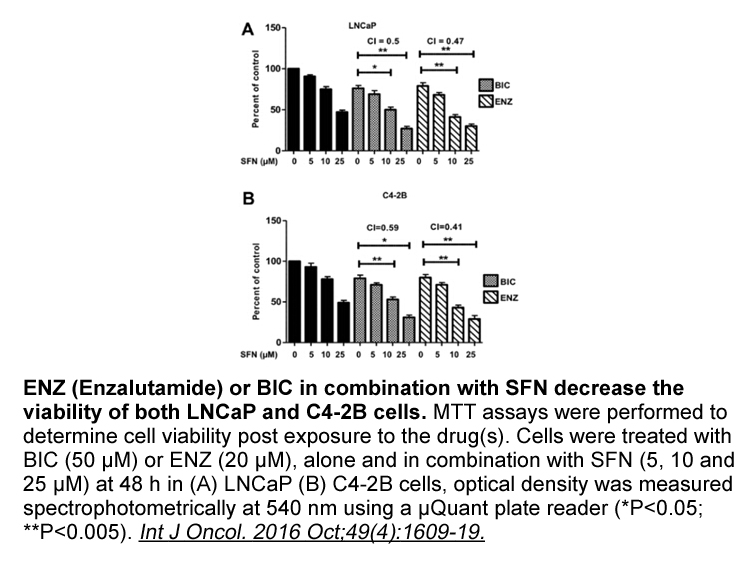
Ulimorelin, also known as TPZ101, is a macrocyclic molecule that is a potent agonist of the ghrelin receptor (Hoveyda et al., 2011). Due to its ability to stimulate gastrointestinal motility, ulimorelin has been evaluated as a possible treatment in gastroparesis (Ejskjaer et al., 2010), ileus (Frase
-
How changes in APP processing by secretase lead to
2022-06-09
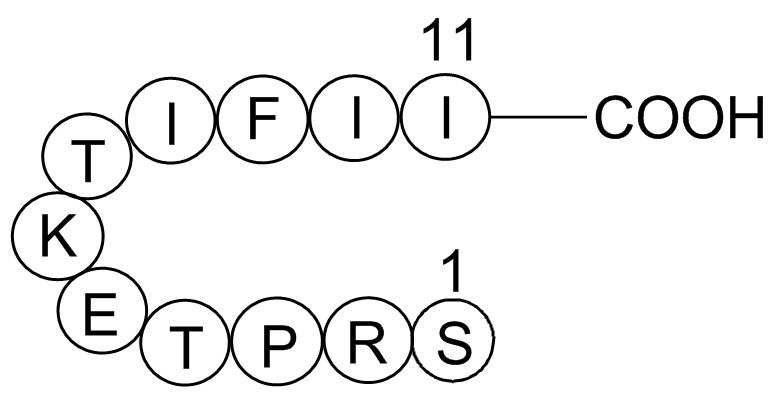
How changes in APP processing by γ-secretase lead to AD is still not well understood. Deposition of amyloid beta (Aβ) peptide fragments of the amyloid precursor protein (APP) in amyloid plaques and hyperphosphorylated tau in neurofibrillary tangles are the cellular hallmarks of AD (O’Brien and Wong,
-
gw501516 mg br STAR Methods br Acknowledgments We would like
2022-06-09
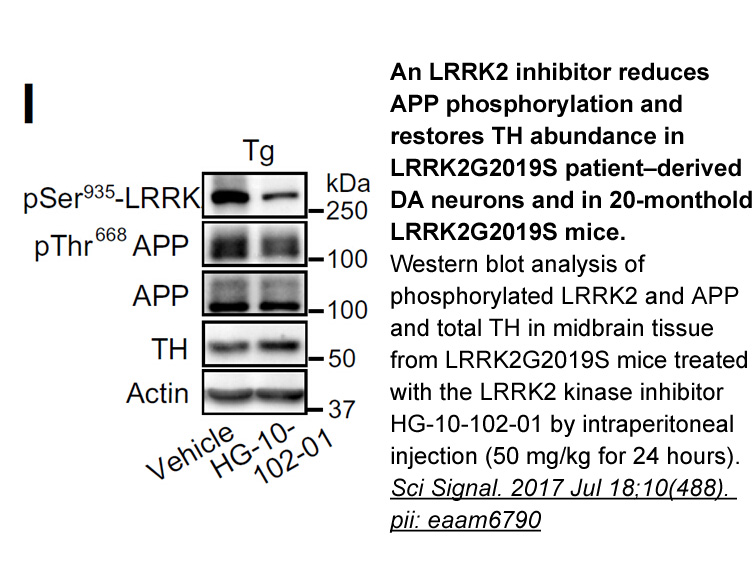
STAR★Methods Acknowledgments We would like to thank V. Gladyshev (Harvard), H. Kornblum (UCLA), L. Greene (Columbia), and J. Baraban (Johns Hopkins) for constructive comments to the project and manuscript. We thank L. Gross and A. Kumar for assistance with editing. We thank L.M. Gerber and Z.
-
br Conflicts of interest br Funding
2022-06-09

Conflicts of interest Funding This work was supported by the Higher Education Commission Pakistan start-up research grant to Anjum Riaz. Introduction Distraction osteogenesis (DO) is an endogenous tissue engineering technology used to repair skeletal including craniofacial deformities, in
-
br To explore further the functional impact
2022-06-08
To explore further the functional impact of the similarity of the UTY and KDM6A proteins, the FANTOM5 human dataset was analysed to determine whether or not the genes were expressed at the same time in the same tissues (which would suggest that they are controlled by the same regulators) or with o
-
Although histamine can induce both proliferation
2022-06-08
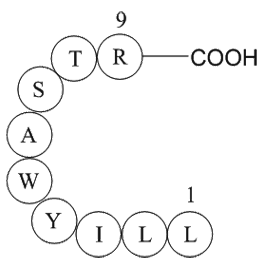
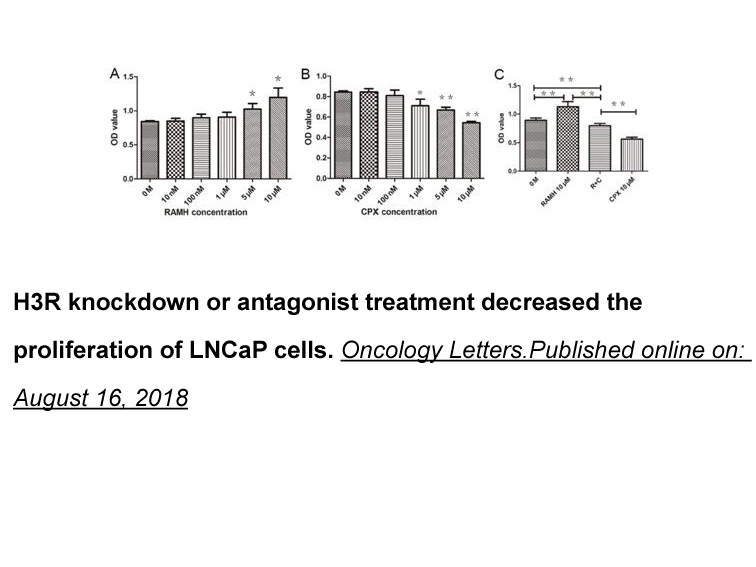
Although histamine can induce both proliferation and differentiation in vitro (Molina-Hernandez and Velasco, 2008), the promotion of neurogenesis conferred by H3R antagonism here does not seem to be caused by either the proliferation or the reduction of apoptosis of NSCs (Figure S3). Furthermore, H3
-
br Conclusion Infections caused by
2022-06-08
Conclusion Infections caused by the P. aeruginosa could not be cured by current antibiotics, making multiple drug resistance of P. aeruginosa an increasing threat for human lives. Looking for a new therapeutic mechanism for infections caused by the P. aeruginosa has become a central issue. There
-
E E evolution at transmission has
2022-06-08
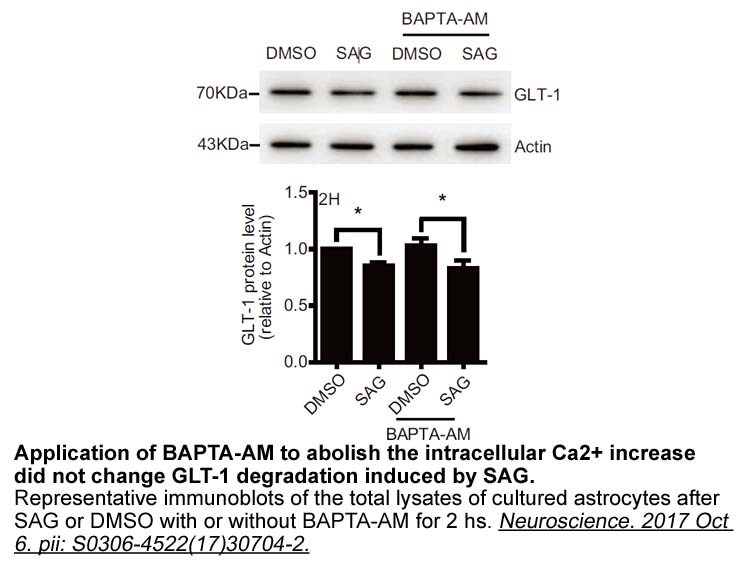
E1E2 evolution at transmission has been explored in multiple previous studies. Vertical transmission selects for E1E2 variants with increased replication fitness due of CTL escape mutations (Honegger et al., 2013). Experimental infection of chimeric liver mice selects for E1E2 variants with increase
-
br Material and methods br Results br Discussion In this
2022-06-08
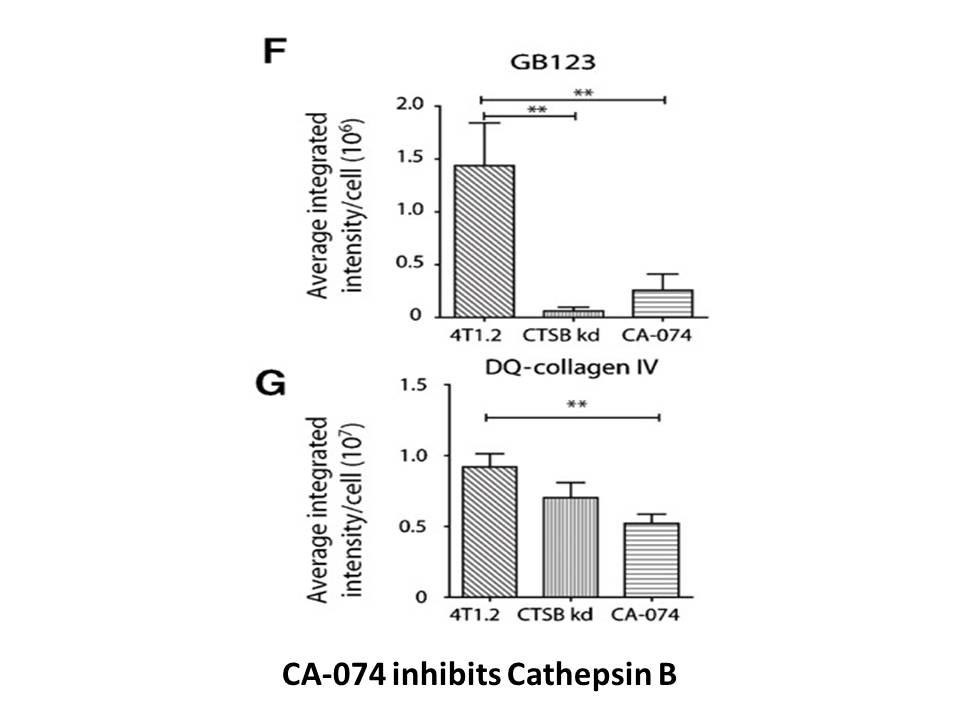
Material and methods Results Discussion In this paper, an HCV molecular epidemiological study was conducted in DU sentinel surveillance sites in 20 prefecture-level cities across Guangdong Province, and the different subtype distributions between IDU and NIDU were compared. Owing to the lac
-
One of the mechanism of regulation of NO content in
2022-06-08
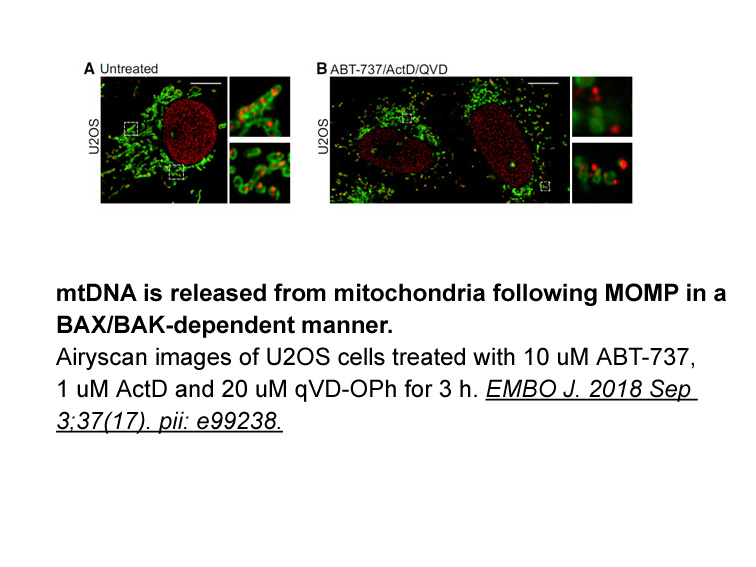
One of the mechanism of regulation of NO content in plant cells is it scavenging by GSH leading to formation of GSNO [59]. This reaction, depending on NO level and availability of glutatione in its reduced form, influences cellular redox potential by lowering GSH content and in consequence may impac
-
As previously discussed even though
2022-06-08
As previously discussed, even though glucose is the major fuel of the brain, neuronal cells may use alternative fuels such as ketone bodies in metabolically challenging situations in which glucose availability is limited [6]. Ketogenesis takes place mainly in the liver, although astrocytes can also
-
A few of the islet specific
2022-06-08
A few of the islet-specific proteins identified in the present study have previously been described in various contexts of pancreatic islets, i.e. PTPRN, SCG5, SCGN, SNAP25 and SNED1, validating the search algorithm applied and supporting the notion that also the novel proteins identified are indeed
8577 records 482/572 page Previous Next First page 上5页 481482483484485 下5页 Last page